Shockwave Therapy in Las Cruces
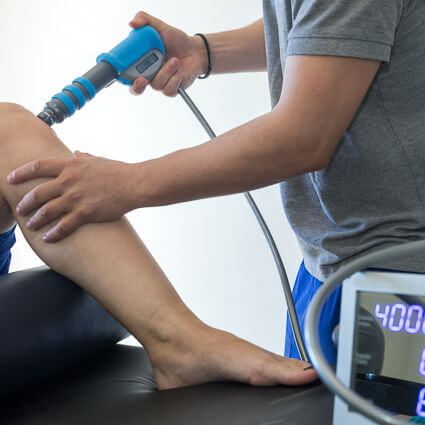 Some injuries settle in and refuse to let go fully, no matter how much rest or stretching you throw at them. Shockwave therapy gives stubborn tendon and soft tissue pain a new way forward, using focused pulses of energy to jumpstart the body’s own repair process. It’s a quick, in-office option for patients who’ve tried the usual fixes and are ready for something with more punch.
How Shockwave Targets Stubborn Tissue
This practice uses a radial shockwave device to send focused pulses directly into injured tissue, stimulating blood flow and triggering the body’s own healing response. Sessions run five to ten minutes per body part, with intensity built up gradually rather than pushed to an uncomfortable level right away.
Las Cruces Chiropractor Dr. Jonathan Smith brings the same soft tissue mindset he uses with dry needling into how he runs each shockwave session, adjusting the pattern to how the individual responds rather than a fixed setting. That same functional approach has earned him local recognition for his soft tissue and acupuncture work.
From Tendon Pain to Old Scars: Conditions We Address
Shockwave reaches a wide range of tendon, joint, and soft tissue problems, including some that don’t always respond well to other treatments. Patients come in for concerns such as:
- Tendinopathies, including tennis elbow and rotator cuff injuries
- Low back, neck, and shoulder pain
- Ankle injuries and nerve entrapment
- Bursitis and early-stage osteoarthritis
- Fibromyalgia and carpal tunnel
It isn’t used over open wounds, metal plates, or implants, and it generally isn’t recommended during pregnancy or for active cancer patients.
What a Shockwave Visit Actually Looks Like
A visit is short, usually five to ten minutes for a single body part, with one area treated and given time to improve before moving to the next. Dr. Smith keeps a close eye on discomfort, aiming to stay in a manageable middle range rather than pushing intensity as high as it will go, an approach shaped by his own rough experience receiving therapy elsewhere at higher settings. Visits are currently offered as packages of six sessions, since most tendon and soft tissue issues need more than one treatment before they shift.
Non-Invasive, Well-Tolerated, and Backed by Research
Because shockwave doesn’t involve needles, incisions, or medication, there’s no real downtime tied to a session. The therapy is generally well-tolerated, but mild, temporary side effects are common and typically resolve within a few days:
- Soreness at the treatment site: the most common effect, usually lasting 24-72 hours
- Redness: temporary, usually fades within a few hours
- Mild swelling: especially over tendons
- Bruising: more likely with blood thinners or in superficial areas
- Small red spots (petechiae): from minor capillary rupture near the skin’s surface
- Tenderness to touch: similar to muscle soreness after a workout
These effects are a normal part of the healing response and generally resolve on their own within a few days.
It’s become a point of difference among the handful of other clinics in town offering it, and patients working through tendon and joint pain that hadn’t moved much with other approaches have noticed a real shift.
Frequently Asked Questions
Who shouldn’t get shockwave therapy?
Ready to Move Without the Nagging Pain?
If a tendon or joint injury has been sticking around longer than it should, despite rest, ice, or stretching, it might be time to try something with more reach. Shockwave therapy at Smith Wellness is built around how your body actually responds, not a standard setting run on every patient. Call (575) 288-1982 to ask whether shockwave is a good fit for what you’re dealing with.
